

close
Choose Your Site
Global
Social Media

Views: 0 Author: Site Editor Publish Time: 2026-05-07 Origin: Site


Specifying high-performance equipment in industrial water treatment represents only half the engineering equation. Even the most robust components will fail quickly without proper field integration. You must account for physical field realities. Improper installation routinely compromises overall system efficiency. It leads directly to premature hinge wear, bypass leakage, or catastrophic water hammer. Physical installation constraints often contradict theoretical system designs. Engineers must prioritize real-world physical constraints over basic textbook layouts. This priority prevents severe operational risks and keeps facilities running smoothly.
This guide outlines how adhering to strict installation geometries protects your expensive capital equipment like pumps and piping. We explore essential fluid dynamics principles and ideal placement rules. You will learn proven methods for preventing uneven disc plate wear. By following these evidence-based field practices, facility managers can stabilize complex flow dynamics. They will ultimately bypass common pitfalls and ensure actual long-term reliability for the entire water treatment process.
Matching valve size directly to pipe size without verifying minimum flow velocity is a primary cause of valve failure.
A minimum of 5x nominal pipe diameters of straight run upstream is strictly required to prevent turbulent wear.
Vertical installations demand specific torsion spring calculations to counteract gravity and ensure positive closure.
Proper alignment of the hinge pin relative to flow dynamics is non-negotiable for preventing uneven disc plate wear.
A dual-plate, spring-loaded operational mechanism works quite differently than older piping technologies. Unlike standard swing valves, these units rely on precise torsion springs. The springs store mechanical energy during normal forward flow. They release this energy to snap the plates shut just before fluid flow reverses. This rapid closure stops backward flow instantly. It essentially eliminates the destructive physical shockwaves known as water hammer.
Failing to accommodate fluid dynamics completely negates these inherent design benefits. A double disc check valve offers an exceptionally compact face-to-face footprint. It also delivers a minimal pressure drop across the pipeline. However, these excellent features become entirely useless in highly turbulent zones. You cannot install them directly onto a pump discharge nozzle. They absolutely require a stabilized straight run to perform correctly.
Consider the long-term implementation risks carefully. Failing to stabilize incoming flow introduces uneven pressure across the internal body. The incoming water hits the two semi-circular discs asymmetrically. One plate opens fully while the other flaps erratically. This imbalance causes severe fluttering and rapid spring fatigue. The discs constantly vibrate against the central hinge pin. Eventual hinge pin shear becomes unavoidable under these chaotic conditions. You will experience sudden, catastrophic system failure. Therefore, precise installation protocols directly govern the true lifespan of these units.
Engineers often fall into a highly dangerous assumption trap during the procurement phase. They automatically select a valve size directly matching the existing piping diameter. This common industry mistake violates core fluid dynamic principles. Sizing must always depend on flow velocity rather than static pipe dimensions. According to AWWA C508 engineering standards, actual flow rates dictate mechanical performance.
You must objectively evaluate your system's specific flow velocity. The moving water must possess enough kinetic energy to push the double discs fully open. If the flow rate remains too low, mechanical problems emerge quickly. The fluid cannot overcome the manufacturer's specified cracking pressure. It fails to fully compress the internal torsion springs.
When this low-flow scenario occurs, the discs hover mid-stream. They bounce constantly within the turbulent flow stream. This destructive bouncing action is commonly known as chattering. Chattering leads to rapid component degradation and severe metal fatigue. The internal springs wear out prematurely. The critical sealing surfaces sustain permanent damage from constant micro-impacts.
To prevent this, strictly calculate required flow velocities before finalizing your specification. Always verify actual flow data against the manufacturer's minimum velocity charts. For instance, an 8-inch pipe moving water at 2 feet per second lacks sufficient force. You might need to install piping reducers. Limit these reducers to a maximum of two pipe sizes to prevent pressure bottlenecks. This specific adjustment safely accommodates a smaller, appropriately sized valve capable of fully opening.
Sizing Strategy | Primary Focus | Operational Outcome | System Risk Level |
|---|---|---|---|
Matching Pipe Diameter | Convenience and easy flange mating | Discs hover and chatter constantly in low flow | Very High (Premature failure likely) |
Matching Flow Velocity | Kinetic energy and cracking pressure | Discs open fully and remain stable | Low (Maximum lifespan achieved) |
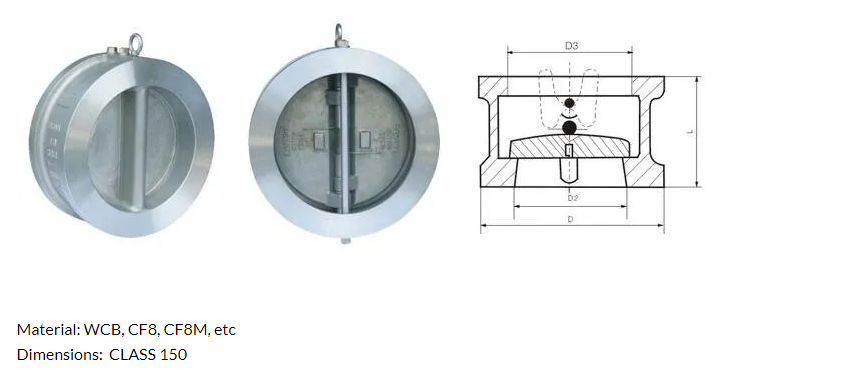
Industry-standard spacing rules prevent unpredictable fluid behavior inside the pipeline. We align our recommendations with recognized frameworks like MSS SP-92. This compliance builds authoritative trust and ensures operational safety. Following these proven spacing rules eliminates destructive turbulence entirely.
Upstream guidelines mandate strict spatial requirements for all field installations. You need a minimum of five pipe diameters of straight piping. This unobstructed piping must sit between the valve inlet and any upstream disruption. Disruptions include pumps, elbows, or tee fittings. The straight run forces the water into an even profile. It ensures equal pressure hits both internal plates simultaneously.
Downstream guidelines demand similar engineering attention. We recommend five to ten pipe diameters of straight pipe downstream. This physical distance allows the exiting fluid to recover properly. It helps the water return to a stable laminar flow state. It also restores necessary fluid pressure before encountering another pipe bend.
Space-constrained facilities often struggle to meet these exact dimensions. We must address these retrofitting realities transparently. If optimal spacing isn't possible, you must respect absolute minimum thresholds. Install the unit at least three pipe diameters away from upstream bends. Acknowledge the associated wear risks when shrinking these safety margins. Shortened runs will reduce overall operational longevity.
Placement Zone | Recommended Minimum Distance | Primary Purpose | Consequence of Ignorance |
|---|---|---|---|
Upstream (Inlet) | 5x Nominal Pipe Diameters | Eliminate swirling eddies and turbulent flow | Uneven plate wear and severe hinge shear |
Downstream (Outlet) | 5x to 10x Nominal Pipe Diameters | Recover laminar flow state and fluid pressure | Downstream cavitation and reduced pump efficiency |
Constrained Retrofit | 3x Nominal Pipe Diameters (Absolute Minimum) | Prevent immediate catastrophic failure | Noticeably shortened maintenance intervals |
Industrial water treatment facilities utilize highly complex piping layouts. However, a double disc check valve is primarily optimized for horizontal piping runs. Horizontal setups naturally provide the most stable operating environment for the internal plates.
You must strictly manage the hinge pin orientation during assembly. The central hinge pin must sit vertically relative to the pipe cross-section. Follow these horizontal best practices:
Keep the hinge pin strictly vertical in all horizontal pipe sections.
Prevent the heavy weight of the plates from resting directly on the springs.
Ensure gravity does not cause uneven, accelerated wear on the lower bearings.
Verify factory visual indicators on the valve body during flange bolt tightening.
Vertical installation constraints require careful, experienced engineering oversight. Upward flow installations are generally acceptable in most water systems. The fluid pushes the plates open naturally against gravity. However, you must carefully verify the total pump head pressure. Every 100 feet of vertical pipe reduces pressure by approximately 37 psi. The pump must overcome this immense column weight to keep the plates fully open.
Downward flow installations carry extreme operational risks. Gravity actively works against the internal torsion springs. The physical weight of the plates pulls them open. You must specify custom spring tensioning for these specific downward runs. Heavier springs ensure a tight seal and prevent unwanted backflow. Without custom springs, the unit will leak continuously.
You must also thoroughly audit vertical runs for system compatibility. Assess the sediment and particulate concentration in your industrial water. Heavy particulates act like abrasive sandpaper on the hinge pins. When flow stops, mud and sand accumulate quickly on the closed plates. This debris physically blocks the plates from opening safely upon the next pump restart.
Proper commissioning separates reliable systems from catastrophic field failures. You must execute detailed pre-commissioning checks before operating the pumps. Walk through necessary visual alignments before applying high system pressure. Perform rigorous torque checks on every single flange bolt.
Emphasize strict cross-bolting techniques during flange installation. Tighten bolts in a standardized star pattern. This technique prevents microscopic valve body distortion. Even slight distortion binds the internal hinge pin severely. It prevents the plates from swinging freely and creating a tight seal.
Follow these specific diagnostic steps during your initial startup phase:
Listen closely for excessive operational noise or metallic clanking.
Frame this excessive chattering not as a simple nuisance, but as an immediate failure indicator.
Identify chattering as a direct symptom of severe turbulence or extreme under-sizing.
Adjust pump speeds temporarily to see if increased velocity smooths the internal plate movement.
Water hammer persistence frustrates many experienced facility engineers. A properly sized double disc check valve usually eliminates water hammer entirely due to its fast closure. If shockwaves still occur, investigate alternative root causes immediately. Do not automatically assume a sudden mechanical failure. You may have severe spring tension mismatches in the assembly. Alternatively, trapped air pockets might be causing extreme cavitation. Cavitation bubbles implode violently under pressure, tearing adjacent metal surfaces apart.
Outline realistic maintenance realities for your specific operating environment. Schedule targeted inspection intervals based on actual industrial water conditions. Highly corrosive chemical fluids accelerate component degradation significantly. Sediment-heavy environments require frequent manual flushing. Proactive visual inspections catch worn springs before they shatter and destroy downstream equipment.
Selecting the right components requires a highly holistic approach. You must look far beyond basic pressure ratings. Facility engineers must carefully analyze actual flow data, complex piping geometry, and spatial orientation. Matching valve size strictly to flow velocity prevents internal plate chattering. Enforcing the five-diameter straight piping rule effectively eliminates destructive fluid turbulence. Correctly orienting the hinge pin stops uneven mechanical wear.
Do not let poor field installation undermine premium industrial hardware. Facility managers and engineers must rigorously verify their flow velocity calculations. We strongly encourage you to consult with technical specialists. They will help verify complex spring configurations and spatial spacing limitations. Address these physical geometric realities before finalizing any procurement decisions. Your proactive planning guarantees stable fluid dynamics and a highly resilient water treatment system.
A: No. Installing directly on the discharge exposes the valve to extreme turbulence, causing plate flutter and rapid failure. Always maintain at least 5 pipe diameters of straight piping between the pump and the valve.
A: Chattering indicates the flow velocity is too low to keep the plates fully open. You may need to resize the valve (using reducers) to match actual flow conditions rather than the pipe diameter.
A: Yes. The central hinge pin must be positioned vertically relative to the pipe cross-section to ensure gravity doesn't unevenly load the lower disc, which prevents premature bearing wear.


