

close
Choose Your Site
Global
Social Media

Views: 0 Author: Site Editor Publish Time: 2026-10-01 Origin: Site


Bulk liquid storage tanks must breathe to handle thermal expansion, contraction, and liquid transfer. Without proper venting, you risk catastrophic structural failure from implosion or overpressure. Facility engineers and plant managers face a strict choice when selecting a venting method. You must balance regulatory compliance, product conservation, and site safety. Defaulting to a basic open vent often leads to severe vapor losses, community odor complaints, and regulatory fines. Conversely, over-engineering with complex valves increases maintenance overhead unnecessarily. The choice between an open vent and an engineered breather valve requires a hard look at the stored medium, environmental conditions, and API 2000 compliance standards. This guide breaks down the technical differences, operational trade-offs, and implementation realities of both systems.
Safety & Structural Integrity: Both systems prevent tank rupture or collapse, but they achieve this through fundamentally different mechanisms (continuous atmospheric exposure vs. controlled pressure/vacuum thresholds).
Emissions, Odor, & Product Loss: Breather valves drastically reduce vapor emissions, fugitive odors, and product evaporation compared to open vents, directly impacting ROI and environmental compliance (EPA/AQMD).
Product Purity: Open vents allow continuous atmospheric moisture and particulate ingress, whereas breather valves isolate the tank contents until specific pressure set points are reached.
Safety Integration: Breather valves can be seamlessly integrated with flame arrestors and nitrogen blanketing systems to prevent combustion, a critical feature missing from standard open vents.
Maintenance Realities: Breather valves require scheduled calibration and leak testing to prevent pallet sticking, whereas open vents require routine checks for physical blockages (e.g., debris, ice, or nesting insects).
Every atmospheric storage tank experiences continuous pressure fluctuations. These changes stem from two primary operational phases. The first is liquid transfer. Pumping liquid into a tank displaces vapor, creating internal pressure. Pumping liquid out creates a void, generating a vacuum. The second phase involves thermal dynamics. Daytime heating expands the vapor space. Sudden weather changes, like a cold rainstorm hitting a sun-baked tank, rapidly contract the vapor space. Both scenarios demand immediate venting to stabilize internal pressure.
Engineers refer to these processes as out-breathing for pressure relief and in-breathing for vacuum relief. Failing to manage these forces leads to severe consequences. Tanks can rupture at the roof seams during overpressure. They can also buckle and collapse inward during a vacuum event. Proper venting equipment prevents these structural failures by allowing the tank to equalize with atmospheric pressure.
Decision-makers evaluate venting solutions against several strict success criteria. Compliance with API Standard 2000 forms the baseline. This standard dictates the exact venting capacity required for atmospheric and low-pressure storage tanks. Beyond basic safety, environmental regulations drive equipment selection. Facilities must minimize Volatile Organic Compound (VOC) emissions. You must adhere to local Air Quality Management District (AQMD) rules to avoid severe penalties and facility shutdowns.
Product protection represents another major factor. Stored media often degrades when exposed to atmospheric oxygen or moisture. Venting solutions must prevent this contamination to maintain product purity. Finally, engineers evaluate the overall operational impact. We weigh upfront equipment specifications against maintenance requirements and the volume of recovered product over the lifespan of the tank.
An open vent provides a continuous, unrestricted path between the tank vapor space and the outside atmosphere. These devices typically feature a simple gooseneck design or a straight pipe equipped with a weather hood. They often include a coarse wire mesh screen. This screen prevents birds, insects, and large debris from entering the tank. Air and vapors flow freely in both directions at all times.
Open vents operate without any moving parts. They offer zero resistance to airflow. When the tank requires in-breathing, ambient air enters immediately. When out-breathing occurs, vapors exit directly into the environment. This simplicity makes them highly reliable for preventing structural damage. They require minimal maintenance beyond occasional visual inspections of the bird screen to ensure no blockages have formed.
Engineers specify open vents for highly specific, low-risk applications. They suit non-volatile, non-hazardous, and non-combustible fluids. Water storage tanks commonly utilize open vents. Facilities also use them for certain heavy oils or benign chemicals. In these cases, vapor loss remains economically and environmentally negligible, making a complex valve system unnecessary.
Despite their simplicity, open vents carry severe inherent limitations. They offer absolutely zero control over vapor emissions. Fugitive odors escape continuously, often leading to community complaints. Open vents also expose the tank interior to ambient humidity. This continuous exposure causes condensation cycles inside the tank. Moisture accumulation leads to internal corrosion, bacterial growth in certain fluids, and product dilution.
Furthermore, open vents completely negate the use of nitrogen blanketing systems. Any inert gas pumped into the tank immediately escapes into the atmosphere, wasting massive amounts of nitrogen. Finally, standard open vents provide no inherent protection against external ignition sources. A lightning strike or external fire can easily ignite escaping vapors, causing a flashback directly into the tank.
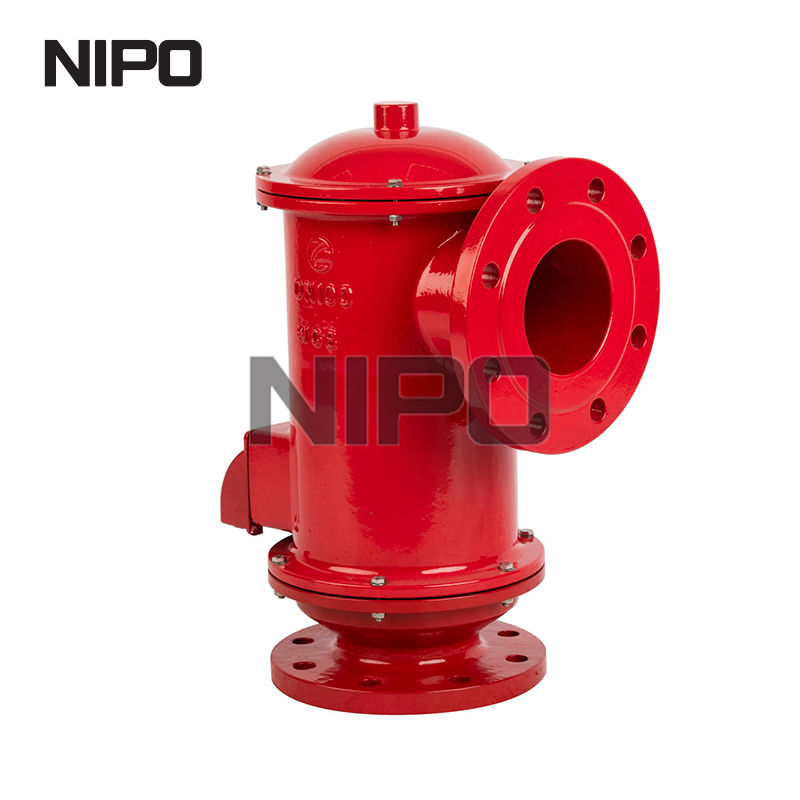
A breather valve operates as a highly engineered pressure control device. Industry professionals frequently refer to this equipment as a pressure vacuum relief breather valve. Unlike an open vent, it keeps the tank sealed under normal conditions. The valve only opens when internal pressure or vacuum reaches a predetermined set point.
These valves utilize internal pallets to control flow. Weight-loaded pallets use precision-machined metal plates to hold the valve closed against internal pressure. Spring-loaded pallets utilize calibrated springs for higher pressure applications. When the tank pressure exceeds the weight of the pallet, the valve lifts. This allows vapors to escape. Once the pressure normalizes, gravity or spring force reseats the pallet, sealing the tank tightly against the valve seat.
This controlled venting mechanism suits demanding industrial applications. Engineers mandate breather valves for volatile liquids and hazardous chemicals. They are essential for high-purity media that cannot tolerate atmospheric contamination. Any tank utilizing an inert gas blanketing system must use a breather valve to contain the expensive purge gas and maintain the protective blanket over the liquid.
The core advantages of this approach center on conservation and safety. By sealing the tank, the valve maintains a stable vapor space. This drastically reduces evaporation losses. Facilities often see a measurable return simply by keeping their product in the tank rather than venting it to the atmosphere. The valve also acts as a physical barrier. It prevents atmospheric moisture and oxygen from degrading the stored product.
Safety integration represents another major advantage. Breather valves easily pair with deflagration or detonation flame arrestors. This combination safely vents combustible media while preventing external flames from entering the tank vapor space, providing a critical layer of explosion protection.
Choosing between these two technologies requires a rigorous technical evaluation. Engineers must analyze vapor conservation, contamination risks, material compatibility, and safety requirements. The operational differences directly impact facility compliance and profitability.
Open vents allow 100% vapor loss during any out-breathing event. As the tank heats up or fills with liquid, valuable product evaporates and escapes. This continuous loss impacts the bottom line and violates strict EPA emission standards for volatile compounds. Facilities operating in strict regulatory zones cannot legally use open vents for VOC-emitting fluids.
A breather valve retains vapors up to its engineered set pressure. The tank remains sealed during minor temperature fluctuations. This translates to measurable savings through product conservation. High-quality valves adhere to API 2521 allowable leak rates. They maintain strict tightness up to 90% of their set point. This precision ensures environmental compliance and eliminates fugitive odor complaints from surrounding communities.
Open vents present a high risk of moisture ingress. Humid air enters the tank freely during every cooling cycle. This moisture condenses on the inner tank walls. It contaminates hygroscopic fluids and accelerates internal rust. Particulate matter also enters easily, degrading high-purity chemicals and fouling downstream pumps and filters.
Breather valves act as a physical barrier against the atmosphere. They isolate the tank contents completely during normal operation. For extremely moisture-sensitive fluids, engineers can integrate desiccant cartridges with the breather valve. This ensures that any air drawn into the tank during a vacuum event is completely dry, protecting the chemical integrity of the stored media.
Manufacturers typically construct open vents from standard carbon steel, aluminum, or PVC. The material choice depends largely on the tank construction. Because open vents handle benign fluids, exotic materials are rarely necessary. A simple galvanized coating often suffices for weather protection.
Breather valves demand precise material compatibility with the stored vapor. The internal pallets, seats, and diaphragms must resist chemical attack. A stainless steel breather valve becomes mandatory for corrosive chemical storage. Food-grade applications and offshore environments also require stainless steel to prevent contamination and resist salt spray. For highly aggressive acids, engineers specify exotic alloys like Hastelloy or PTFE-lined components.
Material Type | Common Applications | Environmental Durability |
|---|---|---|
Aluminum | Standard petrochemicals, light oils | Good for general use, poor in highly corrosive or offshore environments. |
Carbon Steel | Heavy oils, non-corrosive industrial fluids | Requires exterior coating to prevent rust; standard industrial durability. |
316 Stainless Steel | Food grade, pharmaceuticals, corrosive chemicals | Excellent resistance to salt spray, harsh weather, and aggressive vapors. |
Hastelloy / Alloy 20 | Severe acids, highly reactive compounds | Maximum chemical resistance for extreme industrial applications. |
Open vents offer zero flashback protection. They expose the flammable vapor space directly to atmospheric ignition sources. If a spark ignites the venting gas, the flame travels unimpeded into the tank, causing an explosion. You cannot safely store low-flashpoint liquids using a standard open vent without risking catastrophic facility damage.
Breather valves provide robust safety configurations. Facilities can configure them as pipe-away systems. This routes flammable vapors safely to a scrubber, vapor recovery unit, or flare stack. Alternatively, engineers directly combine the valve with an end-of-line flame arrestor. The arrestor quenches any external flame front before it breaches the tank interior, absorbing the heat and extinguishing the fire.
Open vents require very low initial capital expenditure. They contain no moving parts and require zero calibration. Installation is fast and inexpensive. However, they offer no financial return through product recovery. The cheap upfront cost often masks the hidden expenses of lost product and internal tank corrosion.
Breather valves require a higher initial investment. The precision machining, specialized materials, and calibration processes increase the upfront cost. However, facilities calculate ROI based on the value of conserved product. Avoiding EPA emission penalties and extending tank lifespan through reduced internal corrosion also factor into the financial justification. In many volatile liquid applications, a breather valve pays for itself within the first year of operation.
Feature | Open Vent | Breather Valve |
|---|---|---|
Vapor Conservation | Zero (Continuous loss) | High (Seals up to set point) |
Moisture Prevention | Poor (Unrestricted ingress) | Excellent (Physical barrier) |
Emissions Control | None | Meets strict EPA/AQMD rules |
Nitrogen Blanketing | Incompatible | Highly Compatible |
Maintenance Needs | Low (Visual checks only) | Moderate (Calibration required) |
Properly specifying a breather valve for tank installations requires precise engineering calculations. Guesswork leads to catastrophic tank failure or continuous vapor leakage. Engineers rely on industry standards to determine the exact requirements for each specific tank.
API Standard 2000 dictates the methodology for sizing venting devices. Engineers must calculate the maximum required airflow for both in-breathing and out-breathing. The calculation requires several critical variables. Maximum pump-in and pump-out rates determine the baseline volumetric displacement. Thermal dynamics require data on the liquid's flash point, the tank's geographic latitude, and the presence of thermal insulation. Rapid temperature drops caused by sudden rainstorms generate massive vacuum forces that the valve must accommodate.
Maximum liquid pump-in rate (gallons per minute or cubic meters per hour).
Maximum liquid pump-out rate.
Tank dimensions and total volume capacity.
Properties of the stored liquid, specifically the flash point and boiling point.
Environmental factors including maximum regional temperature variations and solar radiation exposure.
Establishing the correct pressure and vacuum settings is critical. These set points must remain safely below the tank's Maximum Allowable Working Pressure (MAWP) and Maximum Allowable Working Vacuum (MAWV). If the valve set point is too high, the tank will rupture before the valve opens. Engineers typically set the valve to open at a pressure slightly above normal operating conditions but well below the tank's structural limits. This ensures the valve only vents when absolutely necessary.
Many chemical and petrochemical tanks utilize nitrogen blanketing. This system injects inert gas into the vapor space to prevent oxidation and combustion. The breather valve set points must not overlap with the nitrogen regulator settings. If the regulator injects gas at a pressure higher than the valve's relief set point, the valve will continuously vent expensive nitrogen. Engineers design a pressure deadband between the blanketing regulator and the breather valve to prevent this continuous gas waste.
Facilities must choose between end-of-line and pipe-away configurations. End-of-line valves vent directly into the atmosphere. They feature a weather hood to protect the internal components from rain and debris. Pipe-away configurations capture the escaping vapors. A flanged outlet connects to a closed piping system. This routes the hazardous or odorous vapors to a centralized scrubber, thermal oxidizer, or flare system for safe destruction.
Both venting systems carry specific operational risks. Facility managers must implement rigorous maintenance and inspection protocols to ensure continuous safety.
The primary risk with an open vent involves physical blockage. Bird screens easily clog with airborne debris, leaves, or nesting insects. In cold climates, ambient moisture freezes on the wire mesh. Crystallized product vapors can also build up over time. A blocked screen turns an open vent into a closed system. When the tank is pumped out, the resulting vacuum will collapse the structure.
Mitigation requires strict preventative maintenance. Operators must perform regular visual inspections of the vent screens. In freezing climates, facilities should install heated weather hoods or utilize coarse screens that resist ice bridging. Routine cleaning schedules prevent product crystallization from restricting airflow.
Breather valves face mechanical risks. The most common failure is pallet sticking. Polymerizing vapors can act like glue, fusing the pallet to the valve seat. Ice formation during winter months causes similar freezing issues. Improper maintenance leads to chattering, where the valve rapidly opens and closes, damaging the internal components and compromising the seal.
Mitigation starts with proper material selection. Engineers select appropriate diaphragm materials, such as PTFE or FEP, to prevent sticky media from adhering to the seat. For crystallizing or highly viscous media, facilities utilize steam-jacketed or electrically traced valves. These maintain a high internal temperature, keeping the vapors in a gaseous state. Finally, facilities must adhere to a strict preventative maintenance schedule. Technicians must clean the internal components and verify the calibration set points annually.
Maintenance Task | Frequency | Action Required |
|---|---|---|
Visual Inspection | Monthly | Check for external damage, debris buildup, or signs of tampering on the weather hood. |
Screen Cleaning | Quarterly | Remove and clean the bird screen to ensure unrestricted airflow. |
Pallet and Seat Inspection | Semi-Annually | Inspect internal pallets and seats for wear, corrosion, or sticky residue. Clean with approved solvents. |
Full Calibration Test | Annually | Remove the valve from the tank and test on a certified test stand to verify exact pressure and vacuum opening points. |
Gather the specific mechanical design data for your storage tank, focusing heavily on the MAWP and MAWV ratings.
Document the absolute maximum pump-in and pump-out flow rates for the specific tank system.
Consult with a qualified valve application engineer to perform a certified API 2000 sizing calculation.
Evaluate the chemical compatibility of your stored media to determine if specialized materials like stainless steel or PTFE are required.
Establish a documented preventative maintenance schedule for leak testing and calibration before installing the new equipment.
A: To protect the tank from structural damage due to overpressure or vacuum while minimizing vapor loss, preventing atmospheric contamination, and controlling fugitive emissions.
A: Yes, provided the tank is structurally rated to handle the pressure and vacuum set points of the new valve. An engineering review of the tank's MAWP and MAWV is required.
A: It is required in highly corrosive environments like coastal or offshore facilities, when storing aggressive chemicals, or in sanitary applications such as food, beverage, and pharmaceuticals.
A: If you are storing flammable or combustible liquids, industry standards like API and NFPA often require a flame arrestor to be paired with the breather valve to prevent external ignition sources from causing a tank explosion.
A: API 2000 dictates how a tank must be vented to prevent failure. The choice between an open vent and a breather valve depends on the volatility of the liquid, safety requirements, and local environmental regulations.
A: Industry best practice dictates a visual inspection every 3 to 6 months and a full calibration test annually. Facilities storing polymerizing or crystallizing fluids require more frequent maintenance intervals to prevent pallet sticking.


