

close
Choose Your Site
Global
Social Media

Views: 0 Author: Site Editor Publish Time: 2026-06-11 Origin: Site


You will see many butterfly valve types in 2026. These include wafer, lug, double offset, and triple offset valves. Each type is special because of its design and job. The wafer style is cheap and can be used in many ways. The lug type is easy to take out for repairs. Double offset valves work well and do not rub much. Triple offset valves use smart shapes for a tight seal.
Knowing about valve parts and designs helps you pick the best one. It also keeps systems working and cuts down on lost time in important jobs.

You should look at high-performance and triple offset valves for tough jobs. They give better sealing and last longer.
Learn about the four main butterfly valve types: wafer, lug, double offset, and triple offset. Each type has special features for different uses.
Pick the right butterfly valve for your job. Think about the fluid, pressure, and temperature. This helps the valve work its best.
Triple offset butterfly valves seal well and last long. They work great in places with high pressure and heat.
Take care of your butterfly valve and pick good materials. This makes the valve last longer and stops leaks. It also saves money on repairs.
Keep up with new butterfly valve technology and rules. Smart features and green designs will matter more in 2026.
You will see many kinds of butterfly valves in 2026. Each one has a special shape and job. You should know how these valves connect to pipes. You also need to know what they are made of and how they stop leaks. This helps you pick the right butterfly valve for your work.
Tip: If you know how a butterfly valve connects and what lines it, you can plan for easy setup and longer use.
Here is a table that shows how different butterfly valve types connect and work:
Valve Type | Installation Method | Performance Features |
|---|---|---|
Wafer Butterfly | Clamped between flanges using long through-bolts | Small size, low cost, but cannot block flow and needs outside support. |
Semi-Lug Butterfly | Like wafer, but lugs help line up better | Easier to put in, but still cannot block flow. |
Lug Butterfly | Bolted alone to flanges with short bolts | Can block flow on one side, good for fixing pipes without losing pressure. |
Flanged Butterfly | Full flanges built in, joined with short bolts | Strongest hold, best for big pipes, handles stress well. |
Wafer butterfly valves are used in many places. This type fits between two pipe flanges. Long bolts keep it in place. The wafer design saves space and money. It is good for simple flow jobs. You cannot block one side of the pipe with it. You must hold up the pipes when you fix them.
Wafer butterfly valves often have rubber or plastic linings. These linings help seal the valve and stop leaks. You will see wafer valves in water plants, heating and cooling, and light factories.
Lug butterfly valves have lugs with threads on the body. You can bolt them to each pipe flange. This lets you take off one side of the pipe without stopping everything. You can fix or check pipes more easily.
Lug butterfly valves block flow better than wafer types. You can use them when you need to shut off flow on one side. They work in water, gas, and some chemical pipes. You can pick soft or metal seats for your needs.
Double offset butterfly valves have a smart shape. The disc moves away from the seat when you open it. This means less rubbing and less damage. The valve lasts longer. Double offset valves use soft seats to seal. These seats seal well but may wear out.
You can use double offset butterfly valves in pipes with medium pressure and heat. They work in oil, gas, and power plants. You will see them where you need better sealing than basic butterfly valves.
Double offset valves lower rubbing when opening and closing.
They handle more pressure and heat than zero offset valves.
They seal well, but not as well as triple offset valves.
Triple offset butterfly valves use advanced designs. The disc and seat have three offsets. The disc only touches the seat when closed. There is almost no rubbing when you use it. The seat is metal-to-metal. This gives a tight seal and stops leaks.
You can use triple offset butterfly valves for hard jobs. They handle high pressure, high heat, and strong chemicals. These valves last a long time because they do not wear out fast. You will see them in power plants, chemical sites, and gas pipes.
Note: The Nipo Valves triple eccentric butterfly valve is a top pick for 2026. It has a three eccentric metal-sealed design. You get tight closing both ways and long use.
Triple offset valves stop all leaks.
They work in very tough places.
They wear out less, so they last longer.
You will see big changes in butterfly valves for 2026:
Companies want valves that save energy and cut pollution.
New seals make valves safer and more trusted.
Many butterfly valves now have smart tools. You can check and control them from far away.
Rules are stricter. You must pick valves that are safe and good for the planet.
Here is a table that shows some key rules for butterfly valves:
Aspect | Details |
|---|---|
Standard | EN 593 |
Material Requirements | Cast iron, ductile iron, and stainless steel must follow strict rules. |
Performance Testing | Valves must pass tests for power, leaks, and strength. |
Size and Pressure Classes | Sizes from DN 40 to DN 2000, pressure up to PN 16. |
Temperature Ranges | Valves must work from -10°C to +120°C, based on the material. |
Compatibility | New valves must fit old systems for easy fixing. |
You need to know these facts to pick the right butterfly valve for your job. The right valve will help you save time, money, and work.
You need to know the main parts of a butterfly valve to pick the right one. The disc is a very important part. It turns inside the valve body to control flow. Different disc shapes and offsets change how the valve works. There are three main types you should know:
Valve Type | Structure Description | Advantages | Applications |
|---|---|---|---|
Concentric Butterfly Valve | The disc is in the center and uses a soft seat to seal. | Works well for water and HVAC systems. | Water, HVAC |
Double-Offset Butterfly Valve | The disc moves away from the seat when it opens, so there is less rubbing. | Lasts longer, wears less, and handles more pressure. | Oil, gas, power plants |
Triple-Offset Butterfly Valve | The disc and seat are shaped like a cone, so they do not slide. | Metal-to-metal seal, no leaks, best for hard jobs. | High temp, high pressure, steam, oil & gas |
Double-offset and triple-offset butterfly valves are best for tough jobs. They work well when there is high pressure or heat. These smart designs help the valve last longer and work better.
The seat is another important part of the butterfly valve. It helps seal the valve and stops leaks. You can choose from many seat materials and linings. Each one is good for different jobs and places. Here are some common choices:
PTFE and RTFE: These are strong and resist chemicals.
EPDM and Buna-N: Good for water, acids, and gases.
Viton and Neoprene: Work with many chemicals and are flexible.
Inconel, stainless steel, and Stellite: Used for metal seats in hard jobs.
Picking the right seat material helps your butterfly valve last longer. PTFE lined seats protect the valve in harsh places, like chemical plants or near the sea. Elastomers like EPDM or nitrile are good for flexible sealing and different temperatures. Metal seats are best when there is high pressure.
When you look at butterfly valve parts, you see how each one helps the valve work. New butterfly valves give you many good things:
Bubble-tight sealing means no leaks.
Quick quarter-turn makes opening and closing fast.
Lightweight design lowers the cost to put it in.
Less rubbing means you do not have to fix it as much.
Great flow control for many liquids and gases.
You can use butterfly valves for water, gas, steam, and even thick liquids. The new parts, like offset discs and special seats, help save energy and stop leaks. If you check the parts often, your system will run longer and safer.
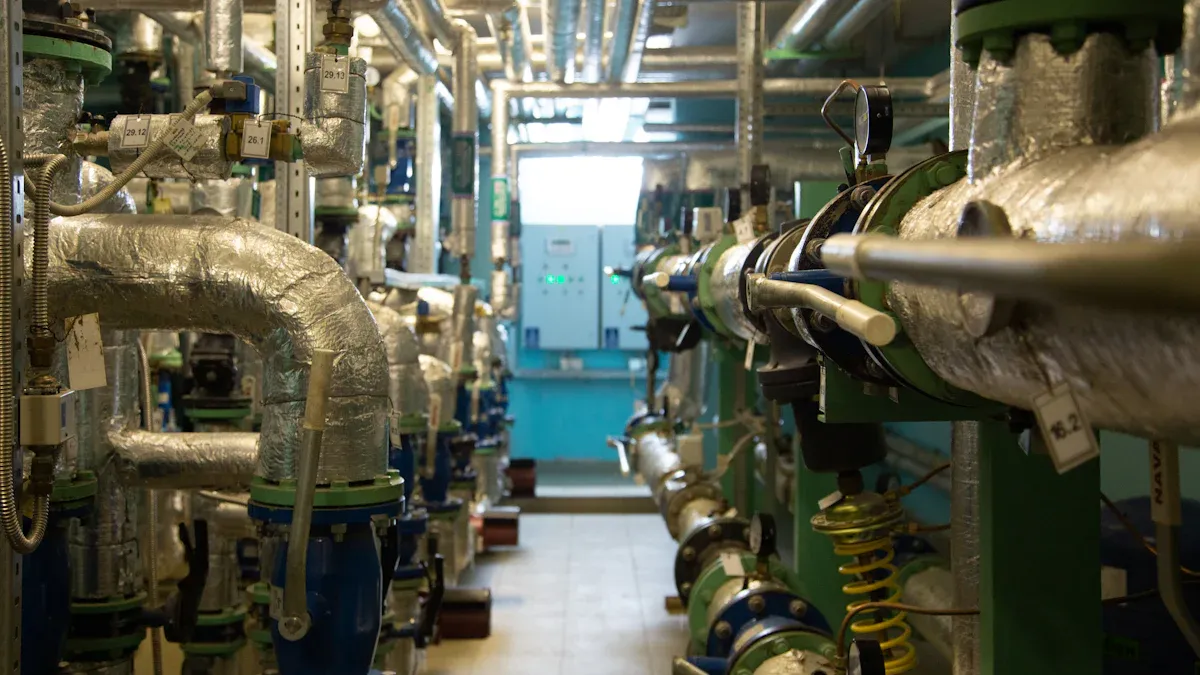
Butterfly valves are used in many industries. They help control the flow of liquids and gases. These valves are easy to use and work well. Here are some main places where butterfly valves are used in 2026:
Chemical manufacturing uses butterfly valves for hot and harsh fluids.
Power plants use them to control steam and water.
Water treatment plants use them for clean and dirty water.
Chemical plants need them for safe and smooth work.
HVAC systems use them for heating and cooling big buildings.
In 2026, butterfly valves work better than before. New designs make them faster and stronger. Better materials help them last longer and work in hard jobs. You will have less trouble and easier repairs with these new valves.
How you fix a butterfly valve depends on its type. High-performance butterfly valves can be fixed or changed. Triple-offset butterfly valves are often fixed, mostly in important places. General service butterfly valves are changed when they break. Lined butterfly valves cannot be fixed, so you must change them if they stop working.
Butterfly valves do more than just basic flow jobs. In 2026, they have new and special uses. Many companies want safer and smarter systems. The table below shows some new ways butterfly valves are used:
Emerging Application | Description |
|---|---|
IoT Integration | Lets you use live data to fix problems early. |
Corrosion-Resistant Materials | Helps valves work in tough places. |
Smart Energy Solutions | Supports energy-saving designs in many jobs. |
Automated Control Systems | Makes things safer and follows strict rules. |
Remote Monitoring | Makes it easy to check valves in risky spots. |
Sustainable Designs | Helps make valves that do not leak and are better for the earth. |
Advanced Sealing Technologies | Gives better seals so there are no leaks. |
CFD and FEA Integration | Makes flow better for good results. |
Smart and IoT-Enabled Valves | Connects valves with smart tools and tech. |
You can use butterfly valves in more places now. These new features help save energy and keep people safe. They also help meet new rules. When you plan for the future, look for butterfly valves with smart controls and strong materials.
When you compare butterfly valves, you see big differences in how they perform and how long they last. High-performance butterfly valves work well in tough places. They can handle very high pressure, up to 1,440 PSI, and extreme temperatures from -320°F to 1,200°F. You need these valves for jobs with strong chemicals or harsh fluids. They keep your system safe and reliable.
Standard butterfly valves cost less and are easy to fix. You can use them for low-pressure jobs. High-performance butterfly valves give you better sealing and last longer. They use strong materials that resist wear and corrosion. This means you do not have to fix them as often.
You should look at these factors when you want a reliable butterfly valve:
The material must match your fluid and stop leaks.
The sealing part must work well to prevent leaks.
You need to check and maintain the valve to keep it working.
The pressure rating must fit your system so the valve does not fail.
Good bushings and bearings help the valve last longer.
If you pick a butterfly valve with a high pressure rating and strong materials, you get better safety and fewer problems.
Butterfly valves fit many jobs because you can choose from different types. Each type works best in certain places.
Concentric butterfly valves work well with chemicals, coatings, food, and even abrasive fluids. Their design keeps the disc away from the body, so they last longer.
Double offset butterfly valves are great for high heat. They wear less and last longer, so you see them in many factories.
Triple offset butterfly valves give you a tight shutoff. You use them in places with high temperature or where you need to stop all leaks.
Metal-seated butterfly valves handle strong chemicals and high pressure. They seal well and work in harsh places.
Soft-seated butterfly valves are best for water, food, and low-pressure jobs.
When you pick a butterfly valve, think about what you need for your job. Look at the fluid, the pressure, and the temperature. Make sure the size and material match your system. You also need to follow safety rules and stay within your budget. If you do this, you will find the right butterfly valves for your industry.
Pick the butterfly valve type that fits your job. Concentric valves are good for water and HVAC. Double-offset valves are better for higher pressure. Triple-offset valves are best for high heat and pressure.
When you choose a valve, remember these things:
What fluid goes through it
How much pressure it needs
How hot or cold it gets
Where you will put it
What rules you must follow
If the supplier can help you
Knowing about advanced valves like triple offset helps you stop leaks. They last longer and work better for future projects.
You put wafer valves between flanges with bolts. Lug valves have lugs with threads. You can take off one pipe side with a lug valve. Wafer valves need extra help when you fix them.
Triple offset butterfly valves have a metal-to-metal seal. The disc only touches the seat when it is closed. This stops leaks and makes the valve last longer.
Butterfly valves are used in water plants, power plants, chemical factories, and HVAC. They help control flow and pressure in many places.
Tip: Pick the seat material for your fluid and heat. Use PTFE for chemicals, EPDM for water, and metal seats for high pressure or heat.


